Services – Provenance research
Every work has passed through doors; the task is to find out which.
Provenance research
Tracing a work’s provenance means reconstructing the sequence of hands, places and dates that links it back to the artist’s studio: dealers, galleries, collectors, exhibitions, sales.
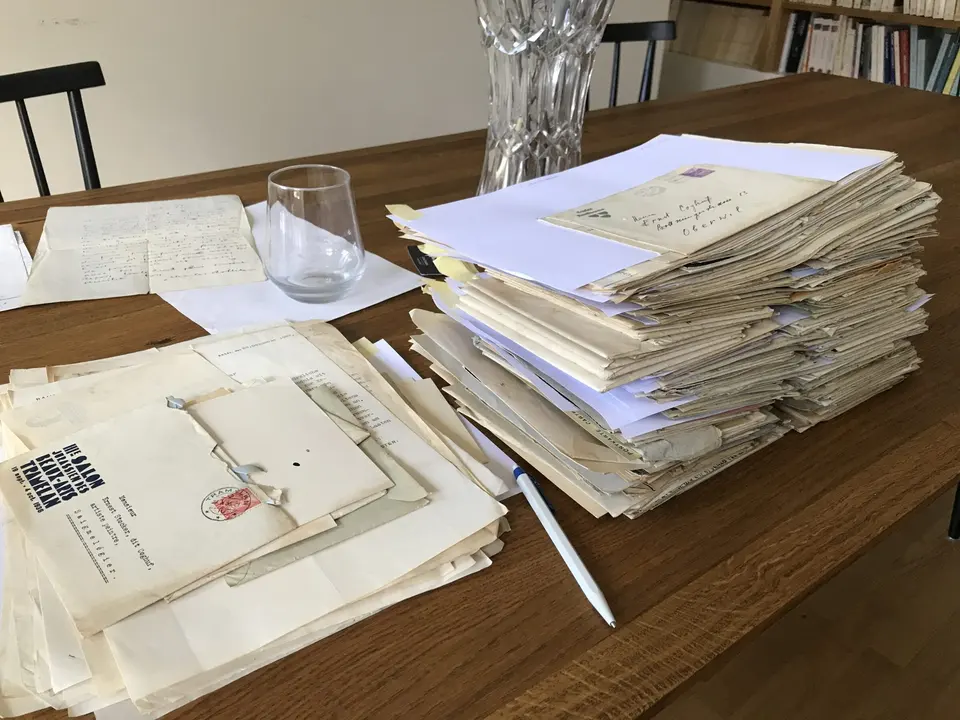
The art trade lies at the heart of my research. I hold a doctorate in art history from the University of Lausanne; my thesis was devoted to the collector and dealer Wilhelm Uhde (1874–1947), and several of my articles to his role in the reception of Cubism and naïve art.
This research taught me to read the traces left by the art trade – correspondence, catalogues, the writings of dealers and critics – between Paris and Berlin, from 1900 to 1950. Among other things, it led to an edition of Uhde’s letters and unpublished texts, co-edited with Manja Wilkens (Deutsches Forum für Kunstgeschichte Paris, 2021).
The same method applies to the history of an entire collection, from its formation to its dispersal – as in the catalogue La collection Givel (2024).
Beyond my many years of research experience, the added value of my services also lies in the worldwide network I have developed and the easier access to sources it provides.
Provenance is more than a matter of historical curiosity. It strengthens a work’s attribution, enriches its documentation and informs those who lend, acquire or pass it on. It is essential when passing on assets to avoid unwelcome surprises. Thorough provenance research can also overturn established beliefs that prove to be mistaken.
Franz Marc’s painting Katzen, Rot und Weiß offers an example. During the settlement of an estate, its sale was blocked by the courts because it appeared on a list of works looted by the Nazis (Art Loss Register). My research demonstrated that this classification rested on a misinterpretation of a source. The heirs were consequently able to sell the painting at Christie’s in London on 5 March 2025.
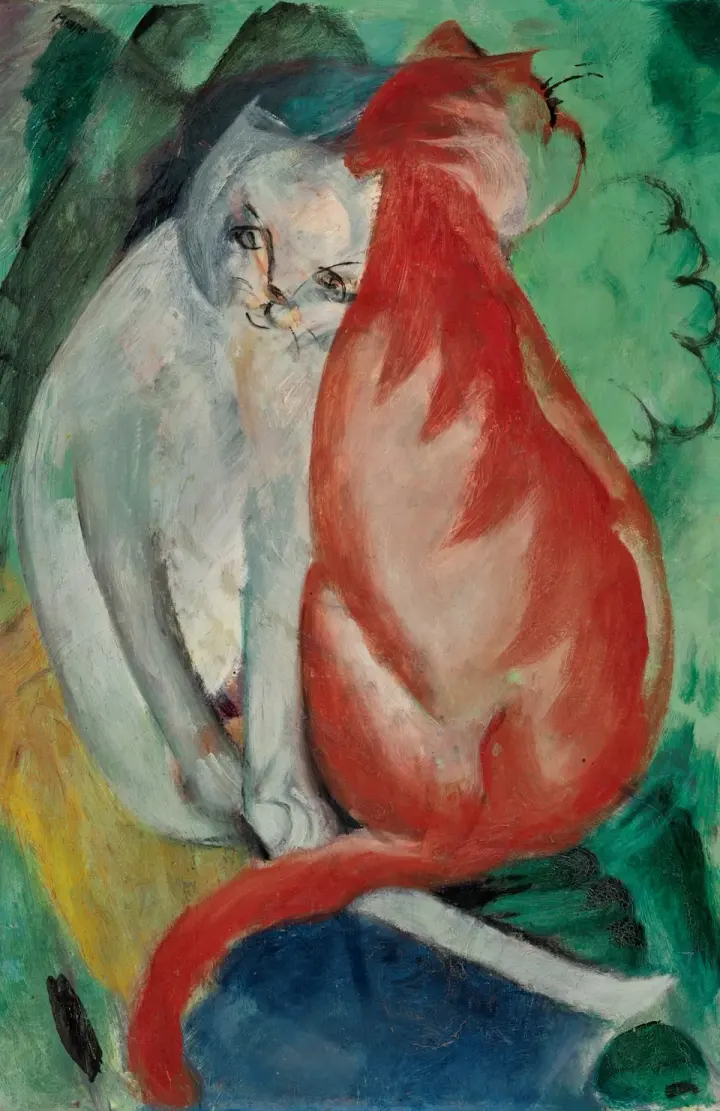
Franz Marc, Katzen, Rot und Weiß, 1912. Sale of 5 March 2025, London, lot 32. View the lot at Christie’s
For whom
Collectors & heirs
To know the path travelled by a work you own.
- Recording and transcription of physical clues: labels, stamps, numbers, inscriptions on the reverse
- Research in exhibition and auction catalogues, the literature and archives
- Chronological reconstruction of successive owners and locations
- Documented provenance file, with sources cited and gaps identified
Museums & foundations
To document collection works, gifts or loans.
- Provenance research on individual works or groups of works
- History of a collection, from its formation to its dispersal
- Chronologies, biographies and catalogue entries
Approach
- 01
Gather and analyse
I gather the information and documents you hold with your help, from invoices and letters to old photographs and family recollections. I also examine the back of the work for clues.
- 02
Expand and question the sources
I seek out exhibition and auction catalogues, a broad range of literature on the artist, and the archives of dealers, galleries and collectors to find traces of the work’s history.
- 03
Trace the thread
I reconstruct the work’s history, recording the date, place and sources for each documented stage. I identify gaps and hypotheses that still need to be verified.
- 04
Report
I write a report presenting the chronology of the work’s history, the sources consulted and the gaps in the research. You can add it to the work’s file.
Let’s talk about your collection
Contact